The Hazards Your Crews Walk Past Every Day
Write your awesome label here.
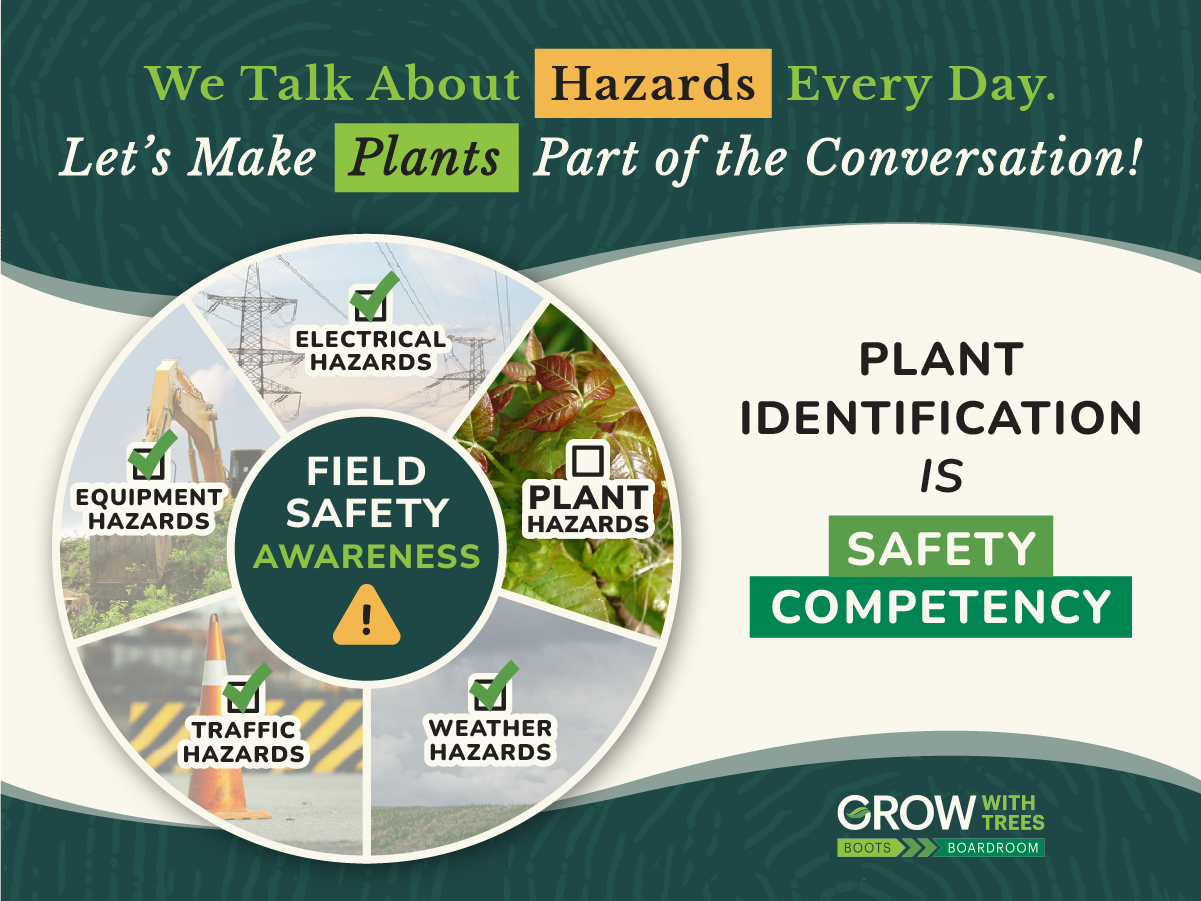
Field crews are trained to recognize safety hazards before work begins. They can identify energized conductors, traffic risks, equipment hazards, and weather-related dangers, but what about the plant hazards growing around them? I’m not talking about hazard trees, rather hazardous plants!
Whether working in right-of-way corridors, around other built infrastructure, at restoration sites, or in other natural areas, hazardous plants (e.g., poison ivy, poison oak, poison sumac, wild parsnip, giant hogweed, poison hemlock) are often an overlooked workplace risk. A single hazardous plant exposure can lead to more than an uncomfortable rash. Depending on the species and circumstances, exposures can result in burns, blisters, eye injuries, respiratory issues, restricted work activity, lost productivity, medical treatment, and in some cases, OSHA-recordable injuries.
The Utility Arborist Association’s Environmental Stewardship Committee recently launched a series of public safety announcements on toxic plants and their potential health risks. The premise is simple: you can't avoid a hazard you can't identify. That's why plant identification should be viewed as a safety competency, not just a botanical skill.
When field personnel can quickly recognize hazardous plants, they are better equipped to make safe decisions before an exposure occurs. In Grow With Trees’ experience, the most effective prevention strategy starts with training, awareness, visual recognition, and practical field guidance that workers can actually use where the work happens.
The goal is to help your crews answer three practical questions:
- What am I looking at?
- What is the hazard?
- What should I do before proceeding?
Hazardous plant recognition sits squarely at the intersection of safety and environmental awareness. Building these knowledge and skills into everyday tailgate discussions can help your crews work safer and more confidently in the field, while also opening opportunities to incorporate plant identification for other purposes, such as compatible vegetation management, biodiversity enhancement, and stewardship.
Tell us: What hazardous plant creates the biggest challenge for your crews?
Dr. Daryl Chesley is the Director of Operations and Client Service at Grow With Trees. He spearheads strategic planning, product innovation, and team optimization to ensure unparalleled client satisfaction, operational efficiency, and scalable business growth.