Why It's Economically and Environmentally Essential to Move Beyond Routine, Cycle-Based Vegetation Management
In the world of utility vegetation management, routine, cycle-based maintenance isn't inherently "wrong"; it has simply outlived its original purpose. Acknowledging that isn't about pointing fingers—it's about recognizing when it's time to evolve.
Let's rewind to the aftermath of the 2003 blackout that shook the utility industry. We were faced with a massive challenge, and the task was clear: reclaim rights-of-way (ROWs) to ensure reliability and safety. In response, the government established the Federal Energy Regulatory Commission (FERC), and routine, cycle-based maintenance became the new norm. For the first three or four cycles, it worked wonders. We kept vegetation at bay, restored order, and prevented disruptions. That achievement is worth noting.
But here's the crux: what exceled in a reclamation context doesn’t work in the context of long-term vegetation management and environmental stewardship. For the past 10-20 years, we've been locked into maintenance cycles that feel increasingly unsustainable. These same routine cycles, combined with inflation, continue to push costs higher, all while vegetation management budgets are increasingly under scrutiny. Public awareness of environmental impacts is at an all-time high, demanding more stewardship-driven approaches. Contractors are asked to repeat the same management practices again and again, which erodes efficiency and innovation. And, let's be honest, maintenance-only work saps morale from even the most dedicated teams.
The challenges we face today are not because we don’t know how to implement routine vegetation maintenance effectively. Rather, routine maintenance was never designed to address the complex environmental, social, and operational demands that vegetation managers are asked to tackle now.
By comparison, Integrated Vegetation Management (IVM) provides a pathway towards a more resilient, sustainable management system. IVM doesn't promise overnight miracles or instant cost savings—in fact, early implementation might even result in a slight increase in expenses. But, what we do see right away is that compatible species start thriving, and this inherent biological control starts working for you. From there, the benefits cascade:
Let's rewind to the aftermath of the 2003 blackout that shook the utility industry. We were faced with a massive challenge, and the task was clear: reclaim rights-of-way (ROWs) to ensure reliability and safety. In response, the government established the Federal Energy Regulatory Commission (FERC), and routine, cycle-based maintenance became the new norm. For the first three or four cycles, it worked wonders. We kept vegetation at bay, restored order, and prevented disruptions. That achievement is worth noting.
But here's the crux: what exceled in a reclamation context doesn’t work in the context of long-term vegetation management and environmental stewardship. For the past 10-20 years, we've been locked into maintenance cycles that feel increasingly unsustainable. These same routine cycles, combined with inflation, continue to push costs higher, all while vegetation management budgets are increasingly under scrutiny. Public awareness of environmental impacts is at an all-time high, demanding more stewardship-driven approaches. Contractors are asked to repeat the same management practices again and again, which erodes efficiency and innovation. And, let's be honest, maintenance-only work saps morale from even the most dedicated teams.
The challenges we face today are not because we don’t know how to implement routine vegetation maintenance effectively. Rather, routine maintenance was never designed to address the complex environmental, social, and operational demands that vegetation managers are asked to tackle now.
By comparison, Integrated Vegetation Management (IVM) provides a pathway towards a more resilient, sustainable management system. IVM doesn't promise overnight miracles or instant cost savings—in fact, early implementation might even result in a slight increase in expenses. But, what we do see right away is that compatible species start thriving, and this inherent biological control starts working for you. From there, the benefits cascade:
- Costs decrease as reliance on mechanical and chemical interventions diminishes.
- Risks are mitigated through natural suppression of incompatible growth and improved ecosystem performance.
- Resilience surges, making ROWs more adaptable to environmental changes and extreme weather.
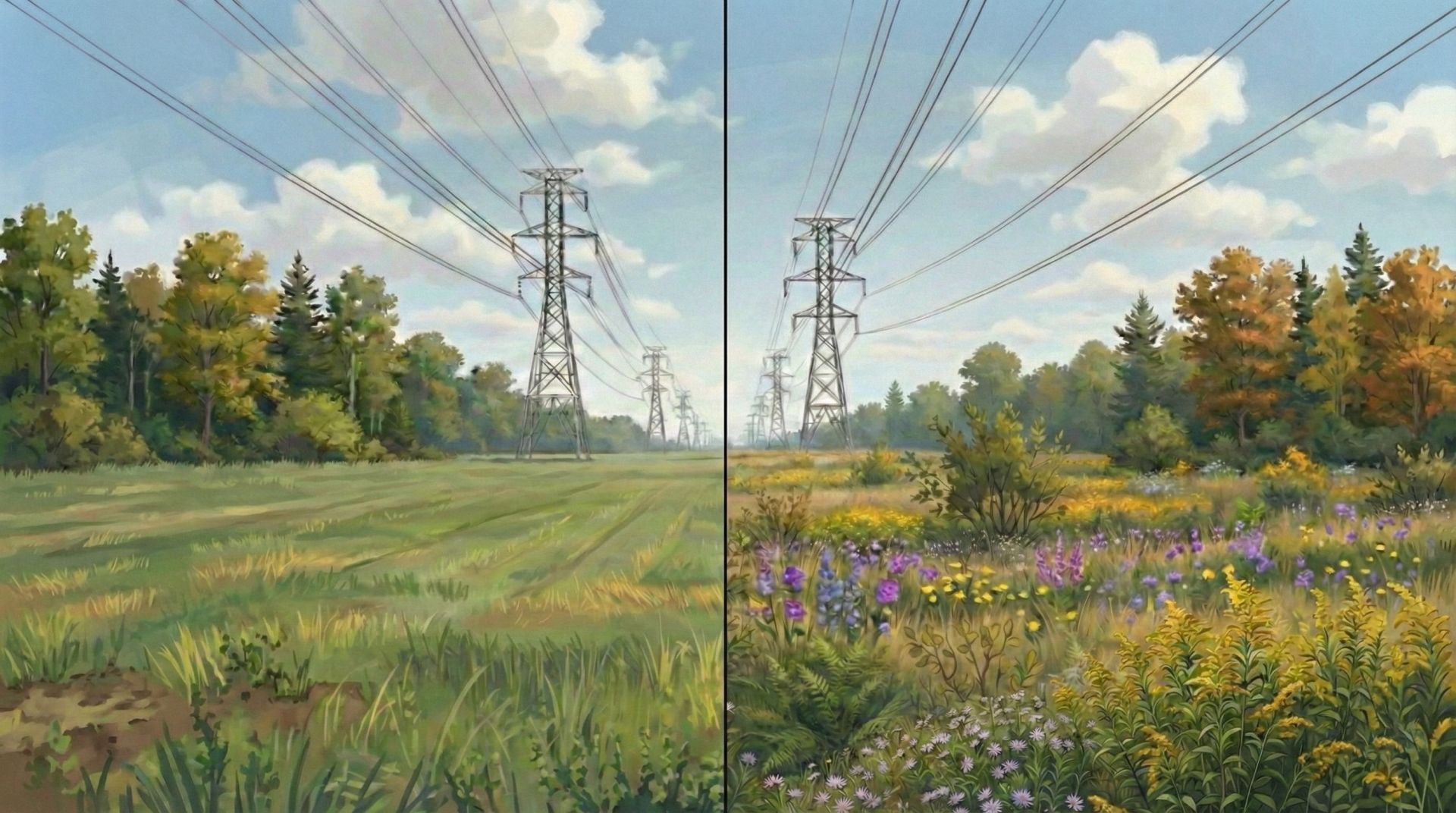
Once biological controls take hold—leveraging nature's own mechanisms—everything aligns. Management becomes proactive and preventive, not reactive and repetitive. The shift to IVM isn't driven by ideology or environmental activism alone. It's fundamentally more strategic and less resource intense.
At Grow With Trees, we’re dedicated to helping you transition to strategic IVM and steward the lands you manage. We've helped utilities across the board make this pivot, turning potential challenges into opportunities for growth and efficiency. Let’s Grow Together—reach out to us today to explore how we can help your teams implement IVM from the boots to the boardroom.
At Grow With Trees, we’re dedicated to helping you transition to strategic IVM and steward the lands you manage. We've helped utilities across the board make this pivot, turning potential challenges into opportunities for growth and efficiency. Let’s Grow Together—reach out to us today to explore how we can help your teams implement IVM from the boots to the boardroom.
Stan Vera-Art is President and Creative Catalyst at Grow With Trees. He has 20+ years of consulting experience with ecosystem restoration companies and utility vegetation management departments, with a special focus on integrating ecological and project management principles.
Copyright © 2026